
I spent a week in Rotterdam at the NATO Command and Control Centre of Excellence annual conference, leading workshops for senior officers, scientists, industry leaders and academics. I am not a soldier; I am a PR and engagement professional. What I took away calls for engagement, not alarm.
A different kind of expertise in the room
I joined the C2COE Annual Conference 2026 to design and lead two breakout workshops on how alliance command and control holds up in a world of artificial intelligence, fast-moving technology and very modern pressures.
I expected to spend the week listening to experts who had everything figured out. What I found was more interesting, and honestly more reassuring.
I was not there to be a military expert. I was there as an expert in my own field, working closely with the Centre's team to help a room of specialists think, challenge and decide together.
1. The most senior people were the first to say "we don't know yet"
In our workshops, we asked mixed tables of officers, engineers, academics and industry specialists to test the assumptions that sit underneath how decisions get made. Rank and nationality were left at the door.
Some of the most senior people in the room said openly that they did not have all the answers. That was not a weakness. It was the moment the conversation got good. People who expected to have nothing to contribute found that they did.
As a civilian, I found this genuinely comforting. The people responsible for our collective defence are not complacent. They are actively looking for the weak spots in their own thinking, and inviting challenge from people who see the world differently.
I also made a point of telling every room that the session was not only about giving the Centre an output. It was for them too: a chance to build networks, open doors with people from other nations and sectors, and leave with ideas they could take further on their own. Security is built on relationships, and some of the best answers will come from connections made in rooms like these.
2. More information is not the same as better judgement
One idea we tested was simple: more data leads to better decisions. Most of the room disagreed. The quality of information, how quickly it arrives and whether you can trust it matter far more than sheer volume. Too much information can even make us more confident in what we already believed.
This is not only a military lesson. It applies to every one of us scrolling through news feeds, group chats and AI-generated summaries. A few habits help:
Ask where information came from before you share it.
Notice when something confirms exactly what you wanted to hear. That is the moment to check twice.
Treat AI tools as helpful assistants, not final authorities.
A calm, well-informed public is one of the strongest assets any democracy has.
3. Resilience is something we practise, not something we buy
Another theme was resilience: how systems keep working when things do not go to plan. The message from the room was clear. Plans matter, but practising them matters more.
We saw a reminder of this in everyday life when a major power outage hit Spain and Portugal in 2025. Life carried on, but people noticed how much depends on electricity, connectivity and card payments.
Europe is already acting on this at a civilian level. The European Commission's Preparedness Union Strategy aims to help households become self-sufficient for at least 72 hours in an emergency, whatever the cause: a flood, a storm, a cyber incident or a wider crisis. Suggested items include food, water, a torch, a power bank, a radio, cash and any medication you need.
I now think of this the same way I think of a fire alarm or a first aid kit. It is not about fear. It is about being the kind of household that can look after itself for a few days, so that emergency services can focus on those who need them most.
4. Civilians are part of the picture
Throughout the week, people kept returning to a theme: modern security is not something that happens only in barracks and headquarters. Energy, communications, transport, finance and healthcare all play a part, and so do the people who run them and rely on them.
That means trust between the public and those who protect us is not a nice extra. It is part of how a society stays strong. When citizens understand what is being done and why, they are far harder to frighten or divide.
5. Technology should serve people, not replace their judgement
There was real enthusiasm in the room for technology that saves time and effort. There was equal clarity that human judgement, accountability and values cannot be automated away. Deciding how much risk to accept, or when you know enough to act, remains a human responsibility.
I left reassured that the people working on these questions are taking both the opportunities and the responsibilities seriously.
What we can do as civilians
None of this calls for alarm. It calls for engagement, because a calm, well-informed public is one of the strongest assets any democracy has. A few simple ways to get behind Europe's efforts:
Stay informed from credible sources and be wary of content designed to provoke fear or anger.
Check your household's basic preparedness, using your national or local government guidance.
Talk about it calmly with family, colleagues and friends. Preparedness is a normal, sensible conversation, not a frightening one.
Support the people who serve, in uniform and in the civilian roles that keep our societies running.
Bring your own expertise. I saw first-hand that skills from outside defence translate well when they are adapted to the setting. Many skills are needed: communications, engineering, science, logistics, care.
Closing thought
I went to Rotterdam to bring a different kind of expertise into the room. I came home convinced that, when it comes to the security and resilience of our societies, there are no outsiders. The strongest defence is a society that is informed, connected and quietly prepared.
Sandrine Williams is an independent PR, communications and engagement consultant and founder of Signet Communications.
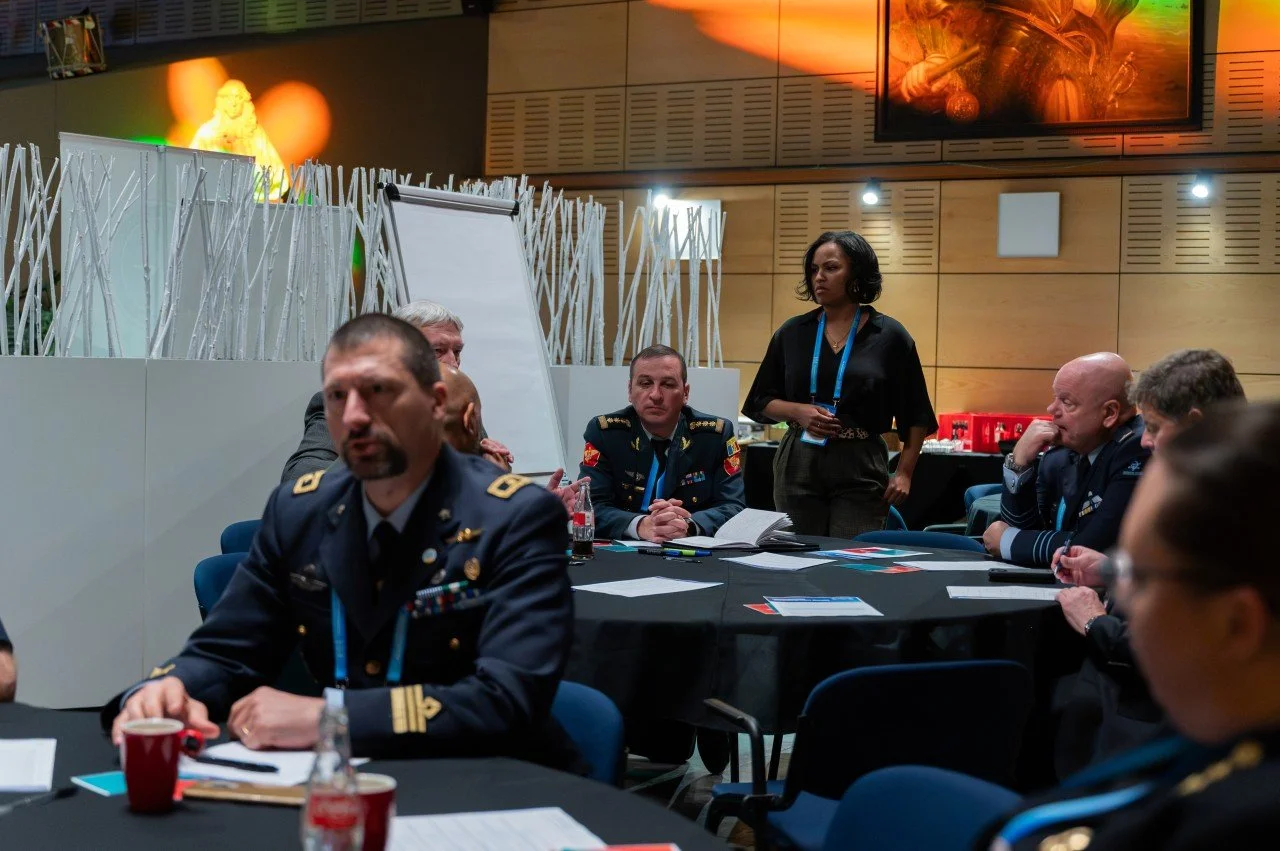
Sandrine Williams leading round table talks during NATO C2COE Conference’s Focus day